Invoicing & Payments
Send polished invoices, automate reminders, and get paid faster with multiple payment options.

Reach out now and get expert guidance tailored to your project needs.
Copyright © 2025 Vezmo Technology , Inc. All rights reserved
Vezmo is the registered trademarks of Vezmo Technology, Inc.
Blog›Open banking, two years in:...
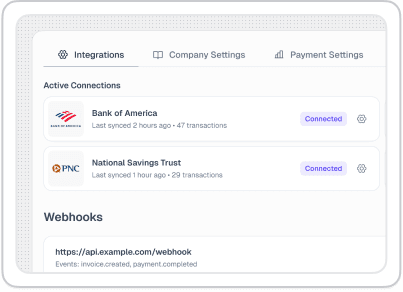
Two years ago, “open banking” sounded like a policy headline. Today it shows up in very normal small-business moments: linking a bank account to your books in under a minute, verifying an ACH payout without waiting for micro-deposits, or getting a lender a clean view of cashflow without exporting a dozen PDFs. That’s the real open banking small business impact—less time spent proving what you already know about your own bank balance.
For most owners, open banking isn’t a new app. It’s the plumbing behind familiar workflows: connecting accounts, pulling transactions, confirming identity, and sharing read-only data with tools you already use. The shift over the last two years is that these flows are more consistent and more predictable—fewer broken connections, fewer “try again later” errors, and better categorization and reconciliation once the data arrives.
If you only remember the early days—where bank connections failed randomly and data came in half-formed—it’s worth updating your mental model. The biggest improvements have been operational, not philosophical: better uptime, better data normalization, and cleaner permissioning. In practical terms, that means fewer interruptions during onboarding and fewer “mystery gaps” when you reconcile month-end.
One of the most tangible changes is how quickly systems can validate a bank account for ACH. Historically, many flows relied on micro-deposits: send two tiny amounts, wait 1–2 business days, have the customer confirm. That waiting period created drop-off, delayed payouts, and increased support tickets.
With open banking-style bank data access, verification can happen in-session by confirming account ownership and real-time status signals. Here’s why that matters operationally:
A simple example: if you pay 40 contractors each Friday and even 10% of bank links fail with micro-deposits, that’s 4 people you need to chase, plus the time cost of rescheduling payments. If each fix takes 15 minutes of back-and-forth, that’s an hour a week—every week—spent on what should be a one-time setup.
Two years in, “show my current balance” is no longer a premium feature; it’s table stakes. Owners expect tools to reflect reality, especially when operating with thin buffers. Better balance visibility affects decisions that happen daily: whether you can restock today, whether you should wait on a vendor payment, and whether payroll needs to move.
Where the maturity shows up is in the details:
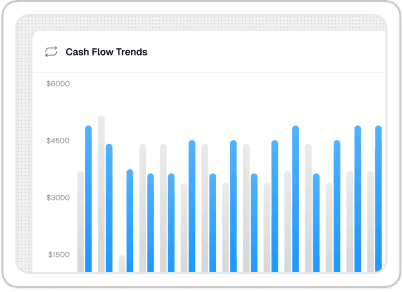
This is also where tools like VezmoCashflow can be more than a dashboard: when balance and transaction data are timely, you can model next-week cash needs using real inflows and outflows instead of stale snapshots.
Faster underwriting is often marketed as “get approved quicker,” but owners feel it as “I didn’t have to re-explain my business three times.” The shift is that more lenders (and more underwriting teams) can consume standardized bank feeds directly, instead of relying on screenshots, PDFs, or manual uploads.
That doesn’t mean every decision is instant. But it does mean a typical underwriting checklist shrinks. Instead of:
you’re more likely to see an in-app request for permissioned bank data for a limited time window. The practical benefit is fewer context switches for you and fewer “can you resend that?” loops.
If you want a simple metric: count how many times you touched your inbox during the last financing process. When bank data access is clean, that number should drop.
Open banking maturity shows up at month-end. Better connections mean transaction feeds are more complete, and the metadata is more usable. That translates into fewer manual fixes: fewer missing days, fewer duplicate imports, and fewer “unknown merchant” entries that stall categorization.
But the biggest shift is that accounting workflows can be built around more reliable bank data. Instead of treating the bank feed as “helpful but untrustworthy,” owners and bookkeepers increasingly treat it as a primary input, then reconcile exceptions.
In VezmoBooks, for example, a strong bank link flow matters because it reduces the time between “money moved” and “books updated.” When that gap shrinks, you can actually use your numbers mid-month rather than only after your bookkeeper finishes close.
Even with progress, open banking isn’t magic. Here are the common failure points that still create headaches, plus what to do about them:
The goal isn’t perfection; it’s reducing the number of high-friction moments. If a bank link fails once a quarter, that’s manageable. If it fails every week, it becomes an operational tax.
The biggest change is that more businesses now assume bank connectivity is a default part of software onboarding. That expectation forced the ecosystem to improve: better connection stability, clearer consent flows, and better data normalization once connected. For owners, the result is simple: fewer manual steps to keep tools in sync.
If you’re evaluating finance tools this year, don’t ask “do you support open banking?” Ask: how often does the connection break, how fast does data refresh, and what happens when something goes wrong? Those answers determine whether open banking small business impact shows up as saved time—or as another support thread.
If you want this to feel boring (in a good way), focus on dependable bank links, clean reconciliation, and cash visibility you can trust. Vezmo’s approach is to make the bank link flow and downstream workflows—VezmoBooks, VezmoCashflow, and your client portal—operate on data that arrives quickly and consistently, so you spend less time moving numbers around and more time running the business.