Vezmo logo – all-in-one business finance and invoicing software platform for companies, agencies, freelancers, and startups to create proposals, send invoices, track payments, manage bookkeeping, billing, contracts, eSignature, financial reports, and business operations

BlogThe 30-minute kickoff call ...

#Tech|May 07, 2026

The 30-minute kickoff call that prevents 90% of project pain

The 30-minute kickoff call that prevents 90% of project pain

Most project blow-ups don’t start in week six. They start on day one, in a kickoff call that feels friendly but skips the hard parts. If you want fewer scope fights, fewer “I thought you meant…” emails, and faster cash collection, you need a tight client kickoff call agenda that forces alignment—without turning the call into a lecture.

Below is the 30-minute structure I’ve used (and coached teams to use) to prevent the problems that usually show up later as missed deadlines, endless revisions, and unpaid invoices. It works for agencies, consultants, product studios, and any service business where delivery depends on shared expectations.

Why the kickoff call is where profit is won (or lost)

When a project goes sideways, you pay for it twice: once in delivery time, and again in management time. A two-hour “quick fix” meeting each week for six weeks is 12 hours of senior attention that was never priced into the deal.

The kickoff call is your best chance to surface misalignment while it’s still cheap. After work starts, every change feels emotional because time has already been spent. Before work starts, it’s just clarity.

Think of the kickoff as a decision checkpoint: everyone leaves knowing what “done” means, who can approve it, and how communication will work. If you don’t leave with those answers, you didn’t have a kickoff—you had a welcome call.

The 30-minute kickoff meeting template (minute-by-minute)

This kickoff meeting template is intentionally short. Time pressure keeps the conversation practical and prevents wandering into brainstorming.

0–3 minutes: reset the outcome and the stakes

  • “Here’s what we’re building together, in one sentence.”
  • “Here’s what success looks like in 30/60/90 days.”
  • “Here’s what will make this project fail (so we can avoid it).”

Say it plainly. If the client corrects your one-sentence summary, that’s a gift. It’s cheaper now than after the first delivery.

3–10 minutes: define deliverables so revisions don’t become scope

Vague deliverables create infinite interpretation. You want definitions that a new team member could understand without you in the room.

  • Deliverable list: what you will produce (and how many).
  • Format: where it lives (doc, slides, portal, repo).
  • Acceptance criteria: what “approved” means.
  • Out of scope: one explicit example of what you’re not doing.

Example: “Website homepage design” is not a deliverable. “One homepage design concept + one revision round + responsive desktop/mobile layouts, approved when content fits and key sections are included” is a deliverable.

10–16 minutes: map the decision chain (this saves weeks)

Most delays are decision delays. The work is ready; approval isn’t.

  • Who is the final approver for creative/technical decisions?
  • Who can provide input, and who is only informed?
  • What is the maximum turnaround time for feedback? (e.g., 2 business days)

If the true decision-maker is not on the call, you have a risk. Name it: “We can proceed, but approvals may extend the timeline. Should we add them to the next checkpoint?”

16–22 minutes: agree on the client meeting structure and comms rules

This is where many teams under-specify and then wonder why they’re answering messages at midnight. Pick a client meeting structure that matches the project, then set boundaries.

  • Channel: email, Vezmo client portal, or a shared workspace (one primary place).
  • Cadence: weekly 25 minutes, or twice-weekly 15 minutes for fast projects.
  • Response time: “We respond within 1 business day.”
  • Escalation: what counts as urgent and how to flag it.

If you use a portal, this is the moment to standardize it: files, approvals, and decisions live in one thread. That reduces “lost in inbox” chaos and makes handoffs cleaner.

22–26 minutes: run the project kickoff checklist (dependencies and risks)

This is the fast sanity check most teams skip. Your project kickoff checklist should cover:

  • Access: logins, accounts, permissions, environments.
  • Inputs: brand assets, copy, data exports, product screenshots.
  • Constraints: legal review, compliance, procurement, internal holidays.
  • Risks: what could block the next milestone, and who owns unblocking it.

One practical rule: every dependency gets an owner and a date. “We’ll send it soon” is not a plan.

26–30 minutes: money, timing, and the next action (don’t be shy)

Projects get awkward when payment is treated like a separate conversation. It shouldn’t be. Confirm the commercial reality and keep it matter-of-fact.

  • Confirm the timeline and the next milestone date.
  • Confirm what triggers the next invoice (milestone, date, or deposit).
  • Send the deposit invoice during or immediately after the call.

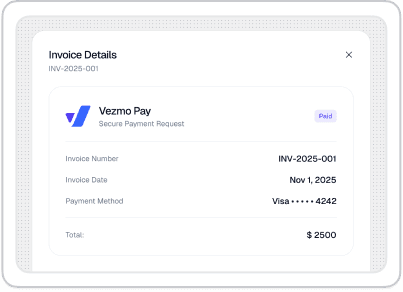
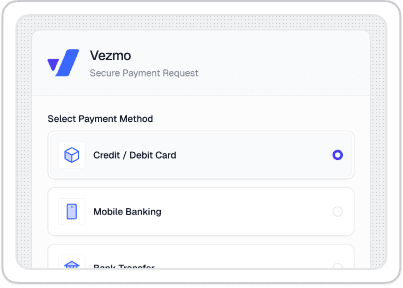
If you’re using VezmoPay, this is easy to operationalize: invoice goes out, payment link is clear, and you can keep the project moving without chasing threads across email.

A worked example: how this agenda prevents a real scope fight

Here’s a common scenario for a fixed-fee project: a client hires you for “a new landing page.” Midway through, they ask for two additional page variants, new copywriting, and an analytics setup.

If your kickoff only said “we’ll design a landing page,” you’re stuck arguing feelings. If your kickoff defined “one concept + one revision round + copy provided by client + analytics handled by client team,” then the new request is clearly a change order.

The math matters. Suppose the project fee is 12,000 and you planned 40 hours of work. That’s 300/hour of effective rate. If the client request adds 12 unplanned hours, your effective rate drops to 230/hour ( 12,000 ÷ 52). That’s a 23% hit—on a project you already sold. The kickoff call is where you protect that margin.

Small upgrades that make this feel premium (not rigid)

The agenda works because it’s direct, but you can make it feel high-touch with a few operator habits:

  • Send a one-page pre-read 24 hours before: goals, deliverables, and 3 questions that must be answered.
  • Take notes in the open: share your screen and write decisions live so nobody can claim ambiguity later.
  • End with a recap email that lists decisions, owners, and dates in bullets.
  • Standardize approvals: one place to comment, one person to approve, one deadline for feedback.

If you run multiple projects, consider tracking your “kickoff completeness” the way you track delivery: did we confirm approver, comms cadence, acceptance criteria, and billing trigger every time? Consistency is what makes operations scale.

Copy/paste kickoff call agenda (use this as your script)

  1. Outcome in one sentence + what success looks like
  2. Deliverables: list, format, acceptance criteria, out-of-scope example
  3. Decision chain: final approver, feedback turnaround time
  4. Communication: channel, cadence, response time, escalation
  5. Dependencies: access, inputs, constraints, risks + owners
  6. Money and next step: invoice trigger + next milestone date

Close the loop the same day

A great kickoff doesn’t end when the call ends. It ends when the client can see the plan, the next task, and the invoice in one place. If you want, you can run the whole flow through Vezmo—send the recap, share files, and collect the deposit—so delivery starts clean and stays clean.

Let’s Build Something Great

Reach out now and get expert guidance tailored to your project needs.

Book a DemoGet Started
Vezmo

Vezmo helps you create invoices, get paid faster, and track everything in one seamless platform.

Copyright © 2025 Vezmo Technology , Inc. All rights reserved

Vezmo is the registered trademarks of Vezmo Technology, Inc.