Invoicing & Payments
Send polished invoices, automate reminders, and get paid faster with multiple payment options.

Reach out now and get expert guidance tailored to your project needs.
Copyright © 2025 Vezmo Technology , Inc. All rights reserved
Vezmo is the registered trademarks of Vezmo Technology, Inc.
Net-30 feels polite. It also quietly turns you into your client’s bank. If you run a service business, the fastest way to reduce stress, stabilize cash, and filter out bad-fit projects is simple: invoice a deposit before you start.
This isn’t about being “tough.” It’s about aligning incentives, protecting your calendar, and making sure you’re paid for real work. Below is a practical playbook for a deposit invoicing service business—including concrete numbers, a client-friendly script, and a clean way to structure an upfront deposit invoice without awkwardness.
When you accept Net-30 on a project, you’re taking on three risks:
Put numbers on it. Imagine a 0,000 project with 0,000 in labor and contractor costs, delivered over 4 weeks. On Net-30, you could finish the work before you collect a dirham—meaning you’re fronting 0,000 in costs plus overhead while waiting for payment. If the invoice is delayed by 15 days (common), you’ve funded the project for ~45 days.
That’s not “standard terms.” That’s a loan.
A deposit does two things at once:
As a rule of thumb for many service categories, a 30–50% deposit hits the sweet spot. It’s enough to cover onboarding and early delivery, but not so large that it feels like you’re asking the client to carry the entire project.
Here’s the simplest structure for most projects:
On that 0,000 example, a 40% deposit is 2,000. If your first week includes discovery, kickoff, and initial production, that deposit usually covers the highest “unknowns” phase—exactly when scope can drift and timelines can slip.
Deposit expectations vary by industry, but the logic is consistent: the earlier your costs hit (labor, materials, contractors), the earlier you should collect.
When in doubt: base your deposit on (1) the cost you’ll incur before the first milestone and (2) the amount you’re comfortable risking if the project ends early. If you’d be upset losing 5,000 on a project, your deposit needs to cover at least that amount.
Most clients don’t reject deposits; they reject surprises. Present your terms as part of your process, early, and with a simple reason.
“To reserve your start date and begin onboarding, we invoice a 40% deposit. That covers kickoff, discovery, and initial production. The remainder is split across milestones so you’re always paying alongside progress, not after everything is done.”
If they ask for Net-30 anyway, keep it calm and specific:
“We can do Net-30 on the milestone invoices, but we still take the deposit upfront to cover initial costs and lock the schedule.”
This small concession often preserves your cash position while giving procurement something to work with.
Operationally, deposits get easier when you separate three things:
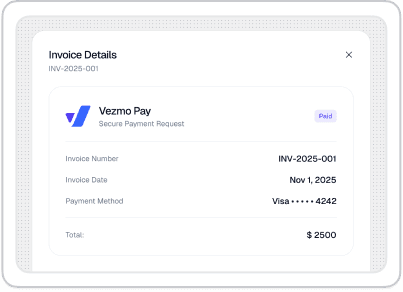
On the invoice itself, clarity matters. Include:
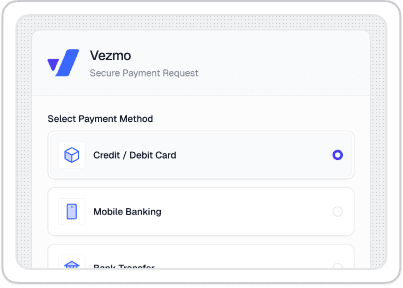
If you use Vezmo’s client portal with VezmoPay, you can send the deposit invoice, collect payment, and keep the milestone plan visible in one place—so the client sees the “why” behind the deposit instead of treating it like a random fee.
Deposits feel most reasonable when they reserve something real. Spell it out: “This deposit reserves a start date of May 20 and blocks production time.” You’re not charging for nothing—you’re allocating capacity.
Pauses create the ugliest cash conversations. Add one sentence to your proposal and invoice notes:
“If the project is paused for more than 14 days due to client dependency, the schedule may shift; completed work is billable against the deposit.”
This keeps the deposit from becoming a negotiation later.
If you want a one-page policy you can train your team on, use this:
Net-30 will always exist. But if you run a serious service business, deposits are how you keep your cashflow predictable while staying easy to work with. Start with one client this week, test the script, and you’ll wonder why you ever financed projects for free.
If you want an easier way to send deposit invoices, collect payments, and keep the milestone plan organized, VezmoBooks + VezmoPay are built for exactly that kind of day-to-day operator workflow.